Best Sleep Masks for Light Control and Comfort
A practical guide to sleep masks, including blackout coverage, eye pressure, side-sleeper comfort, materials, straps, and travel use.
Editorial note
RestWise Guide evaluates products using publicly available specifications, feature comparisons, manufacturer information, and editorial research. We do not claim hands-on testing unless explicitly stated.
Affiliate disclosure
This page contains affiliate links. As an Amazon Associate I earn from qualifying purchases.
Product recommendations
Our Picks
These recommendations are based on public product information, feature comparison, and editorial research. RestWise Guide does not claim hands-on testing unless explicitly stated.
Best Overall
MZOO Contoured Sleep Mask
MZOO
Best suited to shoppers who want a contoured mask with deep eye cups, adjustable fit, and strong light blocking without moving into a premium price tier.
Practical strengths
- Contoured eye cups help reduce direct pressure around the eyelids.
- Adjustable fit is useful for different head sizes and sleep positions.
- A practical choice for readers comparing blackout coverage and comfort.
May not suit
May not suit people who prefer a very thin silk mask or dislike molded foam around the eyes.
Best for Side Sleepers / Low Profile
MyHalos 3D Blackout Sleep Mask
myhalos
A strong option for side sleepers who want a contoured memory foam mask with a lower-pressure fit around the eyes and a compact travel-oriented design.
Practical strengths
- 3D shaping creates space around eyelashes and eyelids.
- Side-sleeper positioning gives it a clearer role than a flat mask.
- Travel-friendly format works for hotels, flights, naps, and shared rooms.
May not suit
May not suit shoppers who want a natural silk feel or a fully modular eye-cup system.
Best Premium / Adjustable Comfort
Manta Original Sleep Mask
Manta Sleep
Useful for shoppers who prioritize adjustable eye cups and a customizable fit. Compared with simpler masks, the Manta design gives the article a premium modular option without relying on medical claims.
Practical strengths
- Adjustable eye cups help tune the fit around the face.
- Zero-eye-pressure positioning is useful for readers sensitive to flat masks.
- A stronger match for customization than basic elastic sleep masks.
May not suit
May feel bulkier than low-profile masks, especially for some side sleepers.
Best Value / Travel
Alaska Bear Silk Sleep Mask
Alaska Bear
A practical value and travel option for readers who prefer a softer silk-covered mask rather than a bulkier molded design.
Practical strengths
- Silk-covered construction can feel smoother against skin than many foam-only masks.
- Compact shape is easy to keep in a bedside drawer or travel bag.
- A helpful comparison point for readers who dislike deeper eye cups.
May not suit
May not provide the same eye clearance or facial seal as a more structured contoured mask.
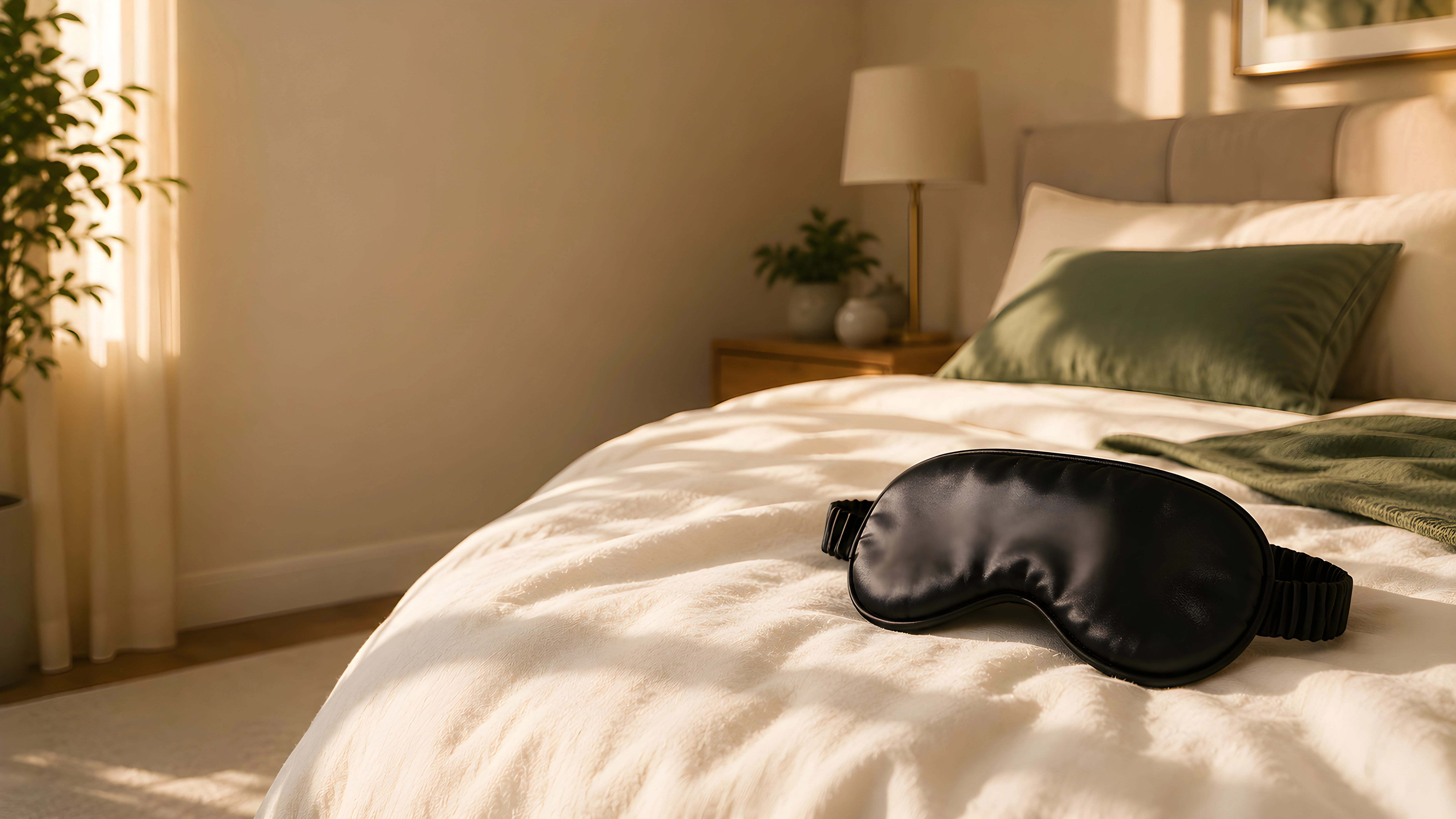
A sleep mask is one of the simplest bedroom accessories, but small design choices make a large difference. The best mask blocks light without pressing on your eyes, slipping off, trapping heat, or irritating skin.
Quick Decision Summary
Choose a sleep mask with full light coverage, a comfortable nose bridge, an adjustable strap, and materials you can clean. Side sleepers should pay close attention to strap thickness and mask edges. People with long eyelashes may prefer contoured eye cups.
Who May Benefit
Sleep masks may suit people with early morning light, travel schedules, shared bedrooms, shift work, or rooms where full blackout curtains are not practical. They are also useful for naps and hotel rooms.
Blackout Effectiveness
Light commonly leaks around the nose and cheek area. A good mask accounts for facial contours with shaping, flexible fabric, or a nose baffle. Total blackout depends on face shape, so a return policy is useful.
Eye Pressure and Eyelash Clearance
Flat masks can press against eyelids. Some people do not mind that; others find it distracting. Contoured masks create space around the eyes and can be more comfortable for blinking, long lashes, or sensitive eyes.
Side Sleeping
Side sleepers need low-profile edges and straps that do not create pressure behind the ear. Thick molded masks may block light well but feel bulky against a pillow.
Materials and Breathability
Silk and soft synthetics can feel smooth. Cotton can feel breathable. Foam can add structure but may feel warm. If you sleep hot, avoid overly padded masks unless the cover fabric breathes well.
Adjustable Straps
The strap should hold the mask gently, not pull tightly. Hook-and-loop closures are easy to adjust but may catch hair. Elastic bands are simple but can stretch over time.
Washing and Travel
A washable mask is important because it sits directly on the face. For travel, look for a mask that keeps its shape in a bag or includes a storage pouch.
Practical Pros and Limitations
Sleep masks are affordable, portable, and easy to try. They cannot change the room environment for everyone, and some people dislike having fabric on the face.
Buying Mistakes to Avoid
Do not buy purely for blackout claims without considering pressure. Do not ignore strap placement. Avoid masks with unclear care instructions. Be cautious with scented or heavily treated materials if you are sensitive.
Selection Checklist
- Strong nose-area light blocking
- Low eye pressure
- Adjustable strap
- Side-sleeper-friendly profile
- Breathable fabric
- Washable construction
- Travel storage
- Eyelash clearance if needed
Conclusion
The best sleep mask should disappear into your routine. Prioritize fit, pressure relief, and washability before style or dramatic blackout promises.
RestWise Guide may earn a commission from qualifying purchases made through links on this site, at no additional cost to you.
FAQ
Are contoured sleep masks better?
They can help reduce eye pressure and provide eyelash clearance, but fit matters more than shape alone.
Can a sleep mask replace blackout curtains?
Sometimes, but curtains may be better if room light affects a partner, child, or the whole sleep environment.
How often should I wash a sleep mask?
Follow the care label. Frequent use usually calls for regular washing because the mask touches skin and hair.