Weighted Blanket Buying Guide: Size, Weight, and Materials
Learn how to choose a weighted blanket by weight, coverage, fill material, fabric, care needs, storage, and safety considerations.
Editorial note
RestWise Guide evaluates products using publicly available specifications, feature comparisons, manufacturer information, and editorial research. We do not claim hands-on testing unless explicitly stated.
Affiliate disclosure
This page contains affiliate links. As an Amazon Associate I earn from qualifying purchases.
Product recommendations
Our Picks
These recommendations are based on public product information, feature comparison, and editorial research. RestWise Guide does not claim hands-on testing unless explicitly stated.
Best Overall / Cotton Option
Adult Weighted Blanket, Queen 20 lb
Luna
Best suited to readers who want a strong general-purpose weighted blanket with a straightforward cotton-focused setup.
Practical strengths
- A practical general-purpose choice for the guide.
- Simple cotton-oriented positioning suits everyday use.
- Works well as the default recommendation for many shoppers.
May not suit
May not be the best fit for readers who want a warmer or more adjustable setup.
Best Value
Adult Weighted Blanket, Queen 15 lb 60x80
Waowoo
Best for readers who want a straightforward value option without adding extra complexity to the purchase.
Practical strengths
- Accessible entry point for shoppers comparing weighted blankets.
- Keeps the buying decision simple and practical.
- A good fit for readers who want a conventional weighted-blanket experience.
May not suit
May not offer the material feel or extras of more premium picks.
Best for Hot Sleepers / Versatility
Weighted Blanket with Removable Cover
Degrees of Comfort
Best for readers who want a more versatile weighted blanket with a removable cover that can help with warmth and care needs.
Practical strengths
- Removable cover improves practical versatility.
- Useful for readers who want more control over warmth.
- A strong middle-ground option between cozy and breathable.
May not suit
May not suit shoppers who want the simplest possible one-piece blanket.
Best Warm & Cozy
Sherpa Fleece Weighted Blanket, Queen 15 lb
Uttermara
Best suited to readers who want a warmer, softer weighted blanket feel for colder rooms or a cozier bedtime setup.
Practical strengths
- Warm, cozy positioning gives the guide a distinct comfort angle.
- Helpful for readers who prefer a plusher blanket feel.
- Balances the more breathable recommendation in the lineup.
May not suit
May trap more heat than a lighter cotton option.
Weighted blankets look simple, but the wrong size or weight can make them uncomfortable. A blanket that is too heavy may feel restrictive. One that is too large can pull over the mattress edge. One that is difficult to clean may become a chore after a few weeks.
Quick Decision Summary
Choose a personal-size blanket, use weight rules only as general guidance, prioritize breathable materials, and check care instructions before purchase. Anyone with relevant medical, breathing, circulation, or mobility concerns should seek professional advice first.
Selecting Weight
The common 10 percent guideline can be a starting point, but it should not override comfort or safety. Body shape, strength, room temperature, and how easily you can move all matter.
If a blanket feels difficult to remove, it is too heavy for practical use.
Bed Size Versus Personal Coverage
Weighted blankets are often most comfortable when they cover the sleeper rather than the mattress. A queen-size weighted blanket may sound generous, but if it hangs off the bed, gravity can make it feel heavier and less stable.
Measure your body coverage needs, not only your mattress.
Glass Beads Versus Plastic Pellets
Glass beads are dense and small, allowing a thinner blanket. Plastic pellets can be bulkier. Either can work if the stitching keeps fill evenly distributed. Look for smaller quilted pockets if you want the weight to stay more uniform.
Breathable Fabrics
Cotton and other breathable covers are useful for warm sleepers. Plush covers can be comfortable in cold rooms but may trap heat. If you plan year-round use, consider a removable cover system with seasonal options.
Care and Cleaning
Read care labels carefully. Some blankets are machine washable, some are spot clean only, and some exceed home washer limits. A removable cover can reduce how often the inner blanket needs cleaning.
Storage
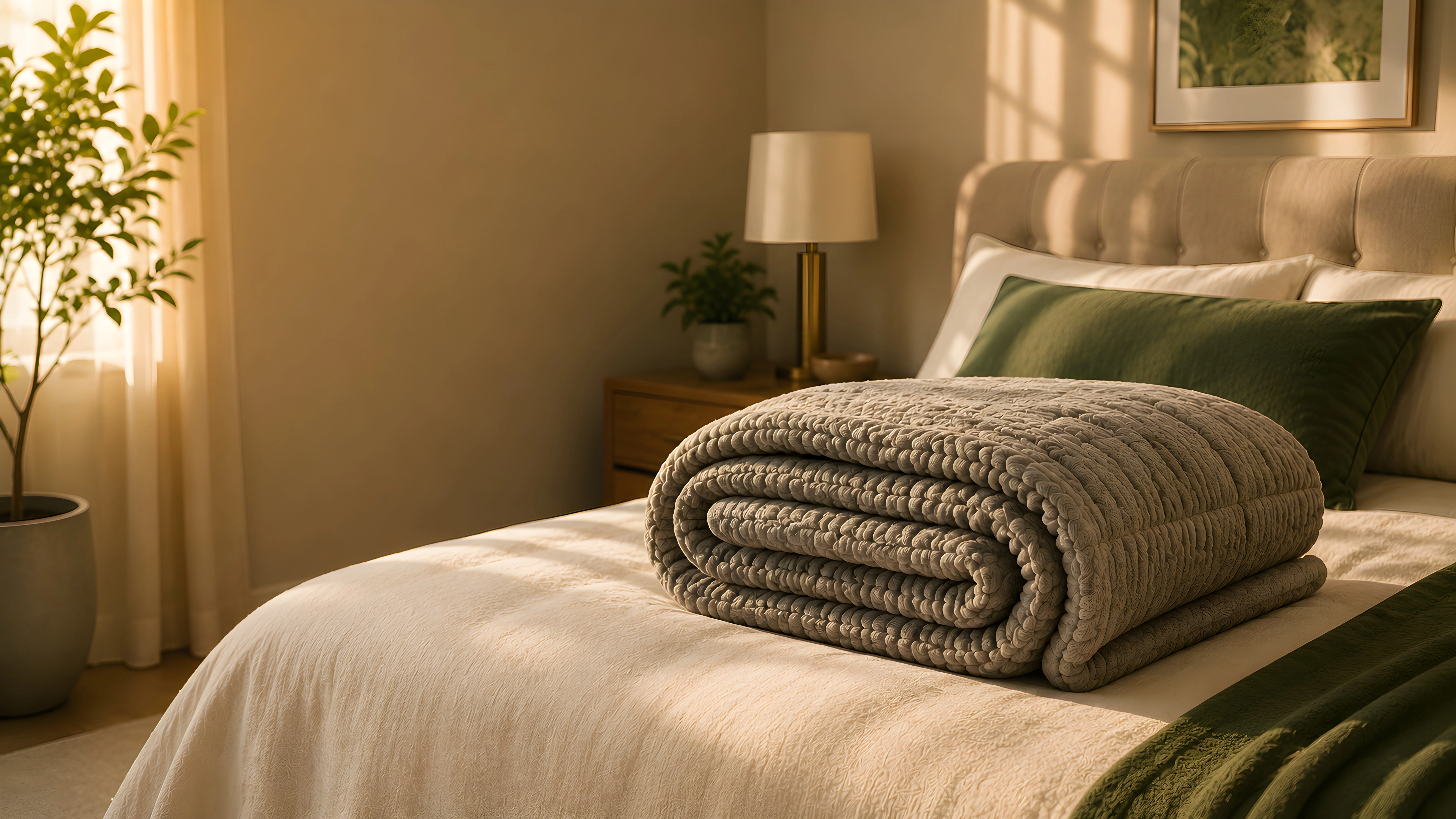
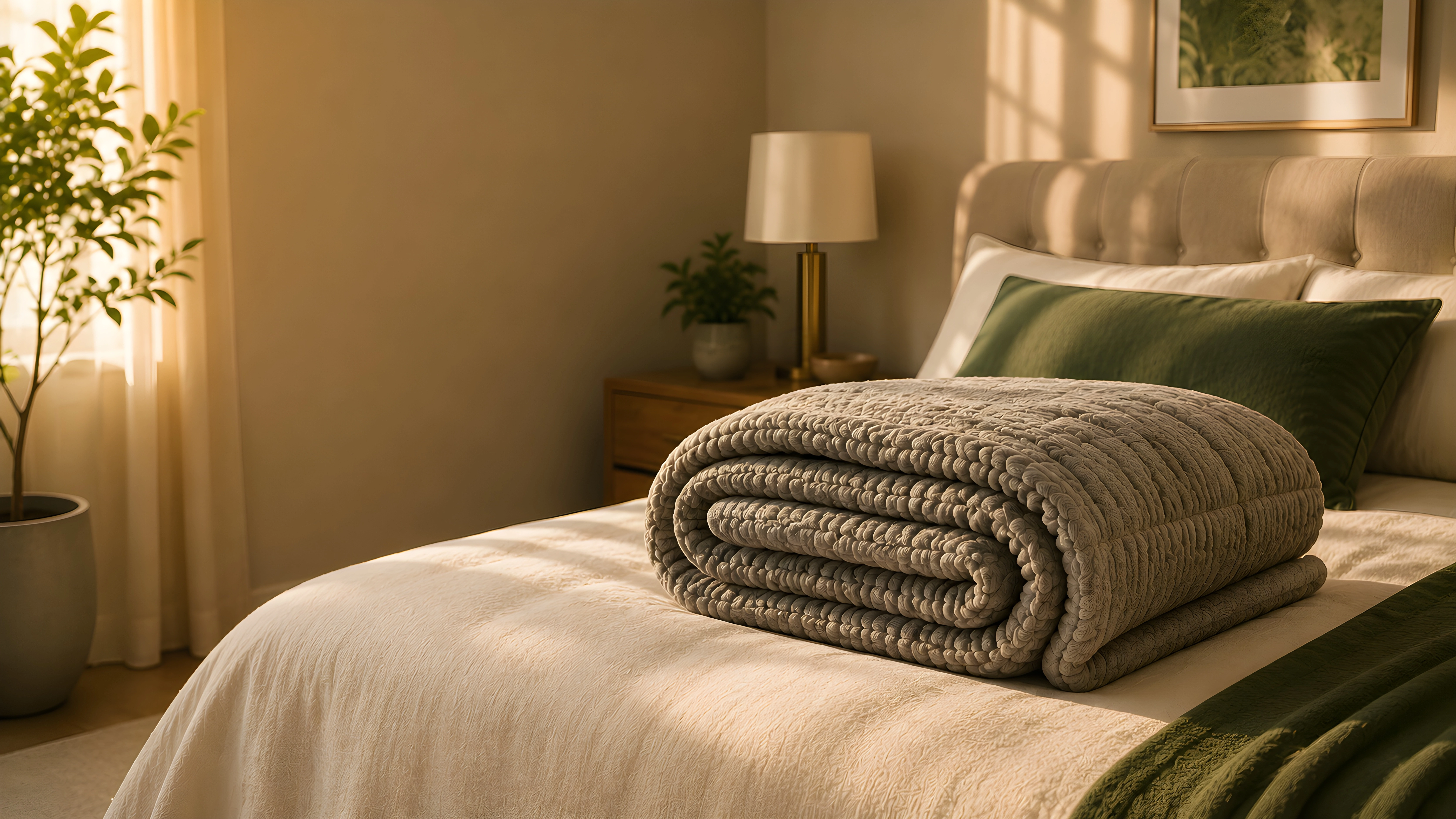
Weighted blankets are dense and can be awkward to store. Keep them dry and avoid stuffing them into damp or crowded spaces. A breathable storage bag is better than a sealed plastic bag if moisture is a concern.
Who Should Seek Professional Advice
People with breathing problems, circulation issues, mobility limitations, sleep apnea concerns, pregnancy concerns, recent surgery, or other medical conditions should consult a qualified professional before using a weighted blanket.
Buying Mistakes to Avoid
Do not buy a blanket for a child using adult sizing assumptions. Do not choose maximum weight for stronger pressure. Do not ignore warmth. Do not assume every washer can handle a heavy blanket.
Conclusion
A weighted blanket should feel secure, not trapping. The best choice is easy to remove, sized for personal coverage, breathable enough for your room, and realistic to clean.
RestWise Guide may earn a commission from qualifying purchases made through links on this site, at no additional cost to you.
FAQ
Should a weighted blanket cover the whole bed?
Usually no. Many weighted blankets work best as personal coverage rather than a blanket that drapes over the bed edges.
Are glass beads better than plastic pellets?
Glass beads are often smaller and less bulky, while plastic pellets may cost less. Construction quality matters either way.
How should I store a weighted blanket?
Store it dry, folded or rolled without sharp compression, and away from moisture.