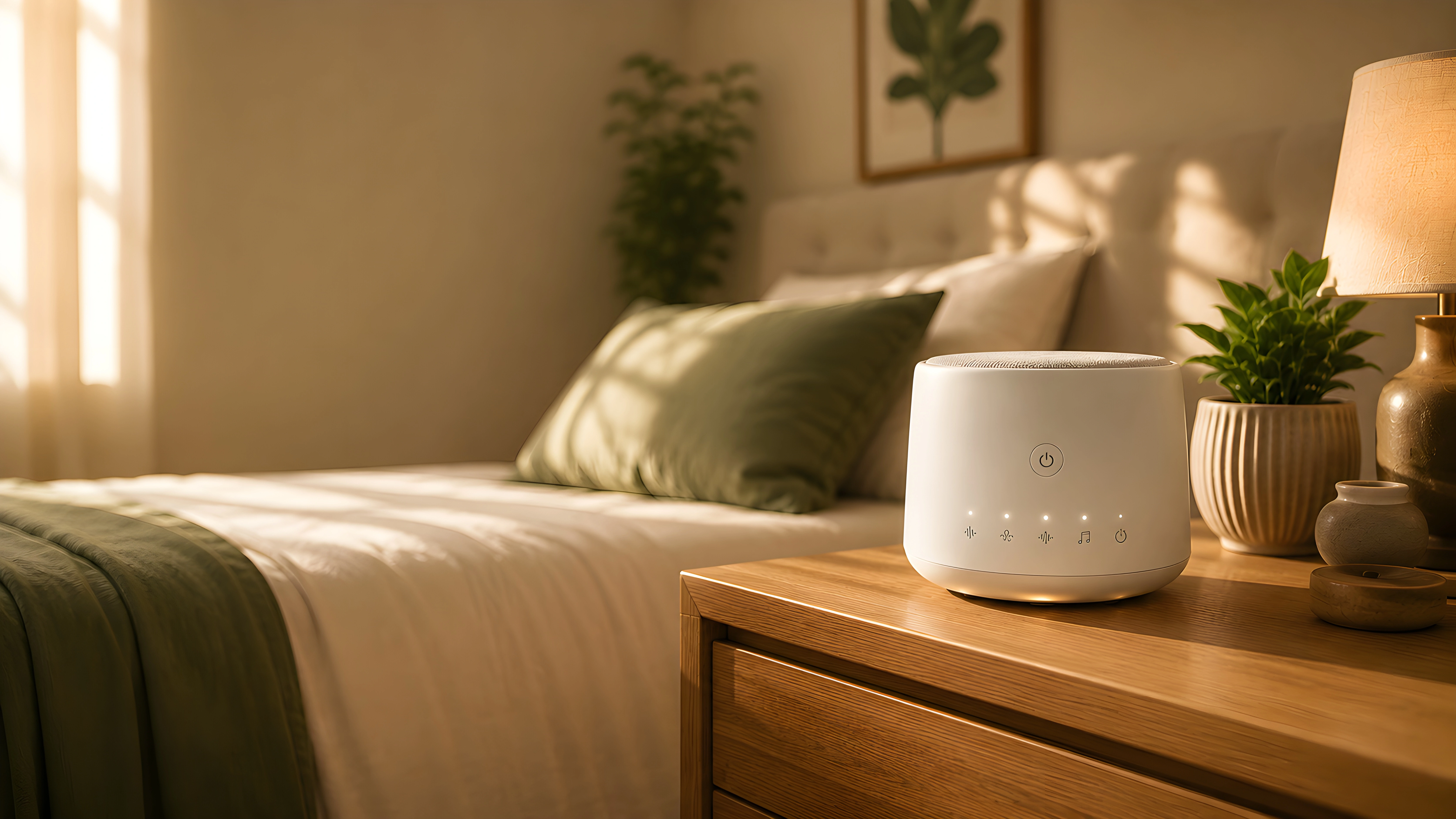
Best White Noise Machines for a Calmer Bedroom
A practical feature-based guide to choosing white noise machines for sleep, privacy, travel, and a quieter bedtime routine.
Editorial note
RestWise Guide evaluates products using publicly available specifications, feature comparisons, manufacturer information, and editorial research. We do not claim hands-on testing unless explicitly stated.
Affiliate disclosure
This page contains affiliate links. As an Amazon Associate I earn from qualifying purchases.
Product recommendations
Our Picks
These recommendations are based on public product information, feature comparison, and editorial research. RestWise Guide does not claim hands-on testing unless explicitly stated.
Best Overall Digital
LectroFan EVO White Noise Machine
Adaptive Sound Technologies / LectroFan
Best for shoppers who want a dedicated digital sound machine with a focused sleep setup rather than a phone or smart speaker in the bedroom.
Practical strengths
- Dedicated bedside design for steady background sound.
- A practical fit for bedrooms where privacy and consistency matter.
- Avoids relying on a phone battery, app account, or notification settings.
May not suit
May not suit sleepers who prefer a mechanical fan sound or a very small travel device.
Best Mechanical Fan
Dohm Classic White Noise Machine
Yogasleep
Best for people who prefer the character of real moving air inside a simple white noise machine.
Practical strengths
- Mechanical fan approach for shoppers who dislike digital loops.
- Simple concept with fewer sound-mode decisions.
- Well suited to a permanent nightstand placement.
May not suit
May not be ideal for travel or for readers who want many sound profiles, timers, or digital controls.
Best for Travel
Rohm Portable White Noise Sound Machine
Yogasleep
Best for shoppers who need a compact sound machine for hotels, guest rooms, naps, or temporary sleep spaces.
Practical strengths
- Compact format is easier to pack than a full-size bedside unit.
- Useful for creating a consistent sound cue away from home.
- A focused alternative to playing sleep audio from a phone speaker.
May not suit
May not suit large bedrooms or sleepers who want the fuller feel of a larger bedside machine.
Best Budget / Sound Variety
Sound Machine with 40 No-Looping Soothing Sounds
Magicteam
Best for shoppers who want more sound choices while keeping the buying decision practical and budget-conscious.
Practical strengths
- Broad sound selection for readers still learning which profiles feel comfortable.
- A practical option for shared rooms with different sound preferences.
- Useful when a simple white noise setting is not enough variety.
May not suit
May not suit shoppers who prefer a minimal interface or the natural feel of a mechanical fan machine.
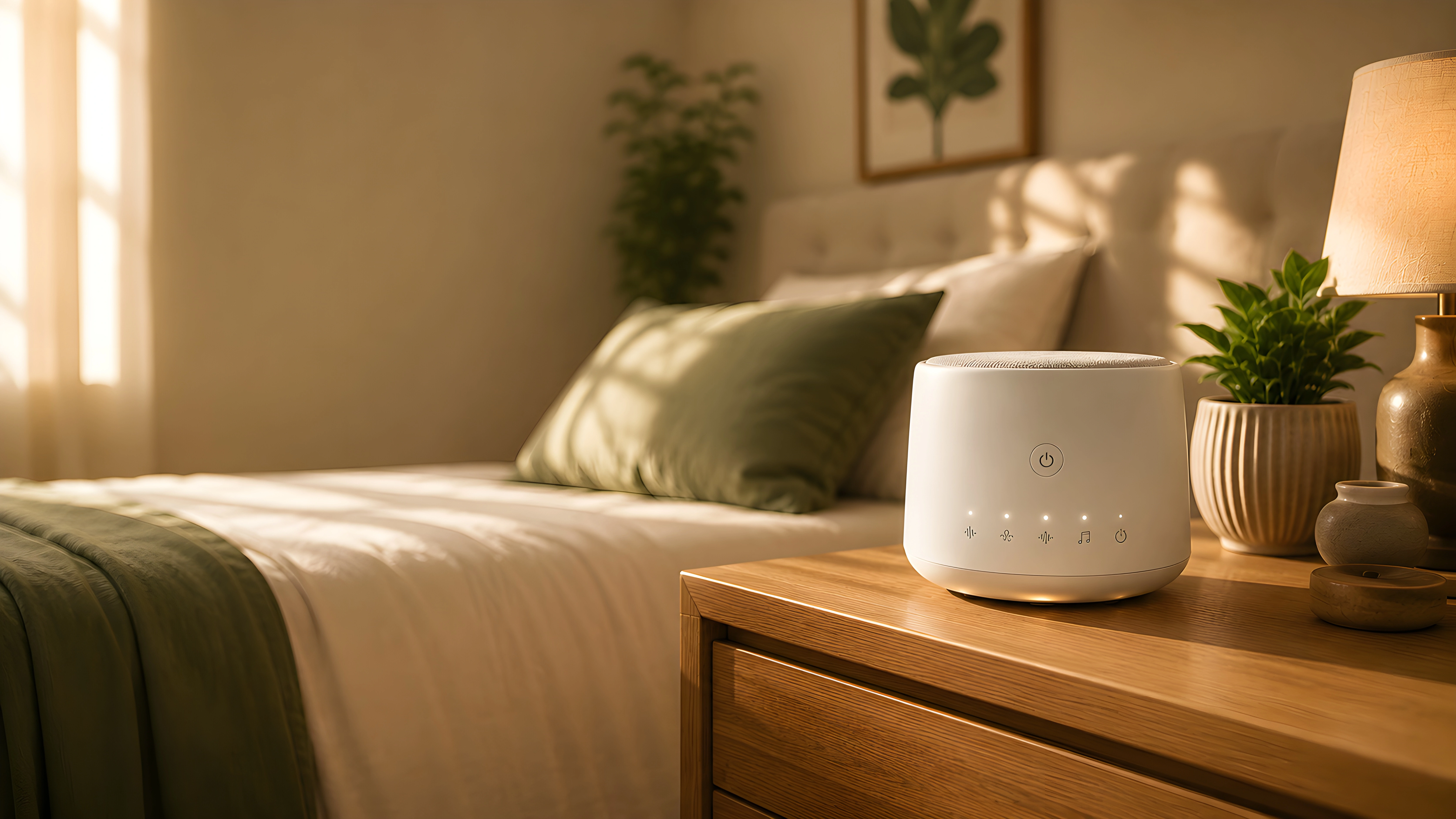
White noise machines can make a bedroom feel more settled by adding a consistent sound layer. They are often used to soften intermittent noise from traffic, neighbors, appliances, pets, or activity elsewhere in the home. The right choice is less about finding a universally perfect machine and more about matching sound quality, controls, power, and placement to the way your room actually behaves at night.
This guide combines practical buying criteria with selected product recommendations based on public product information, feature comparisons, and editorial research. RestWise Guide does not claim hands-on testing for these units.
Quick Decision Summary
Choose a white noise machine with a sound profile you can listen to for hours, physical controls that are easy to use in the dark, and a volume range that does not force you to run the unit loudly. For bedrooms with inconsistent outside noise, look for steady broadband sounds, fan sounds, or pink noise. For travel, prioritize compact size, USB power, and a lockable control layout.
Avoid buying only because a product has a long sound list. A smaller number of well-recorded, non-looping, comfortable sounds is usually more useful than dozens of thin effects.
Who May Benefit
A white noise machine may suit people who are distracted by sudden sound changes, live near traffic or shared walls, share a home with different schedules, or want a consistent bedtime cue. It may also help create a predictable sound environment for naps, travel, or temporary rooms.
It is not a medical treatment for insomnia, tinnitus, anxiety, or any diagnosed condition. If sleep disruption is persistent, severe, or connected to health symptoms, professional guidance is the safer next step.
What to Look For
Sound Options
Start with the sound categories that matter: white noise, pink noise, brown noise, fan sound, rainfall, and low ocean-like sound. White noise is brighter and can mask sharper sounds. Pink noise is softer and often feels more balanced. Brown noise is deeper and may be less irritating for people sensitive to high frequencies.
Natural sounds can be pleasant, but they should not have obvious repeating loops, sudden bird calls, spoken words, or dramatic changes. For sleep, boring is often a feature.
Volume Control
The machine should offer gradual volume changes, not only a few big jumps. You want enough range to cover mild room noise without overpowering the room. A good practical test is whether the lowest settings are genuinely quiet and whether the middle settings are usable from across the room.
Portability and Power
For a bedside-only setup, a plug-in unit is fine. For travel, look for USB-C power, compact dimensions, and a layout that will not turn on accidentally in a bag. Battery-powered units can be useful, but overnight runtime and charging behavior matter more than the battery claim alone.
Timers and Night Use
Timers are helpful if you only want sound while falling asleep. Continuous play is better if your goal is masking early morning noise. Controls should be tactile and simple enough to operate without fully waking up.
Privacy Considerations
Some smart speakers and app-connected devices can play noise, but a dedicated machine may be better for people who do not want microphones, accounts, notifications, or cloud features in the bedroom. If privacy matters, choose a machine that works fully offline.
Practical Pros and Limitations
White noise machines are simple, reusable, and usually easy to place. They can help make a room feel more consistent and may be more comfortable than playing audio through a phone all night.
Their limits are important. They do not block sound the way construction, sealing, curtains, or quieter appliances can. They mask some disruptions, but loud impact noise can still cut through. They also introduce sound into the room, which some partners may dislike.
Buying Mistakes to Avoid
Do not choose the loudest machine by default. More volume is not automatically better. Do not rely on a phone app if notifications, battery drain, or speaker quality will become problems. Avoid devices with bright displays that cannot fully dim. Be cautious with units that hide basic functions behind an app.
Selection Checklist
- Comfortable white, pink, or brown noise
- No obvious short loops
- Fine volume adjustment
- Dim or no display
- Physical controls
- Timer and continuous-play options
- Offline operation if privacy matters
- Travel-friendly power if needed
- Clear return policy
Conclusion
The best white noise machine for a calmer bedroom is the one that produces a steady, comfortable sound at a sensible volume and fits your nightly routine without adding friction. Focus on sound quality, control simplicity, and realistic room needs rather than marketing claims.
RestWise Guide may earn a commission from qualifying purchases made through links on this site, at no additional cost to you.
FAQ
Do white noise machines work for every sleeper?
No. Some people find steady background sound calming, while others prefer silence or natural room sounds.
What volume is safest for overnight use?
Use the lowest comfortable volume and place the device away from your head. Families using sound around children should be especially conservative.
Should I choose a fan-based or digital sound machine?
Fan-based machines can sound more natural, while digital machines usually offer more sound choices, timers, and travel-friendly features.