Best Sunrise Alarm Clocks for Gentler Mornings
A feature-based guide to sunrise alarm clocks, including brightness, sunrise duration, sound, dimming, backup alarms, and app dependence.
Editorial note
RestWise Guide evaluates products using publicly available specifications, feature comparisons, manufacturer information, and editorial research. We do not claim hands-on testing unless explicitly stated.
Affiliate disclosure
This page contains affiliate links. As an Amazon Associate I earn from qualifying purchases.
Product recommendations
Our Picks
These recommendations are based on public product information, feature comparison, and editorial research. RestWise Guide does not claim hands-on testing unless explicitly stated.
Best Overall
Hatch Restore 3 Sunrise Alarm Clock
Hatch
Best suited to readers who want an all-in-one wake light, sound machine, and smart routine device.
Practical strengths
- Combines sunrise alarm, sound machine, smart light, and wind-down routines.
- Physical controls help reduce phone use after setup.
- A strong option for shoppers who want deeper routine customization.
May not suit
May not suit readers who want a fully app-free device or who prefer a simple one-time setup.
Best Premium / Phone-Free Light
Philips SmartSleep Wake-Up Light HF3520
Philips
A strong option for shoppers who want a dedicated wake-up light with physical controls and no app dependency. It gives the article a phone-free premium alternative to smart routine devices.
Practical strengths
- Dedicated wake-up light design keeps the focus on sunrise simulation.
- Physical controls appeal to readers avoiding app-based bedroom devices.
- A useful comparison point against smart routine clocks.
May not suit
May not suit shoppers who want app libraries, guided audio, or extensive smart routines.
Best Budget / Simple
JALL K6 Sunrise Alarm Clock
JALL
Useful for readers who want sunrise simulation, a dimmable clock, sound options, and simple bedside operation without committing to a premium smart clock.
Practical strengths
- Simple feature set is approachable for first-time sunrise alarm shoppers.
- Dimmable clock and sound options support basic bedside routines.
- A practical alternative for readers who do not need a premium app ecosystem.
May not suit
May not offer the same light refinement, audio quality, or routine depth as premium models.
Best Bedroom-Friendly Design
REACHER Natural Wood Grain Sunrise Alarm Clock
REACHER
Best suited to shoppers who want a softer bedside look with physical controls, sunrise simulation, and sleep sounds. The wood-grain design gives the article a decor-friendly option that is meaningfully different from circular wake lights.
Practical strengths
- Wood-grain styling may blend into calmer bedroom decor.
- Physical controls and sleep sounds keep the setup practical.
- A useful design-focused alternative to smart clocks and bright plastic wake lights.
May not suit
May not suit shoppers who want a connected smart routine system or a premium light-only device.
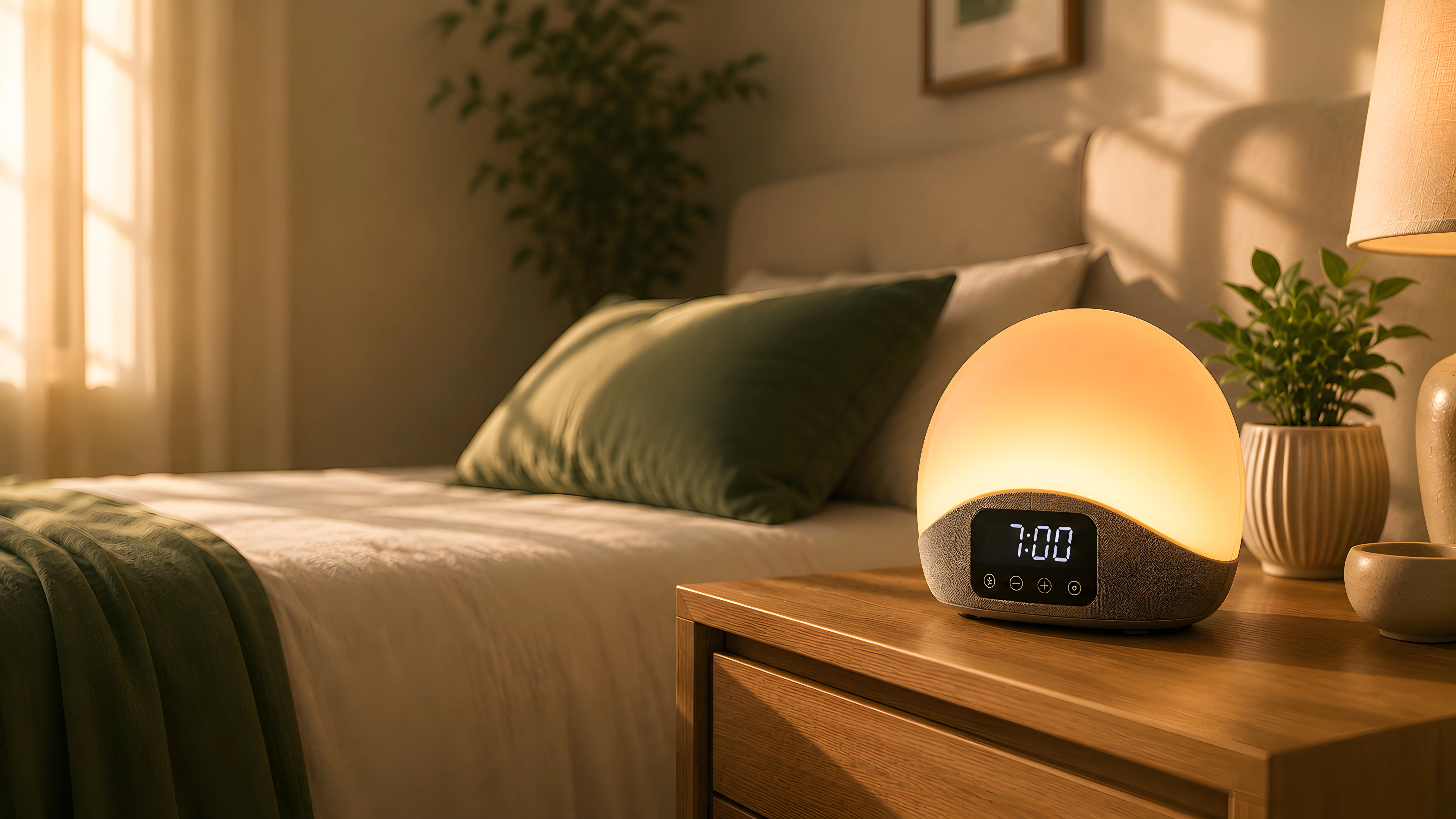
Sunrise alarm clocks use gradually brightening light to make waking feel less abrupt. They can be especially appealing in dark bedrooms, winter mornings, or homes where a loud alarm feels jarring.
Quick Decision Summary
Choose a sunrise alarm with adjustable brightness, a sunrise duration that fits your routine, dim display controls, and a backup sound alarm. Avoid models that depend entirely on an app for basic settings.
Who May Benefit
A sunrise alarm may suit people who dislike sudden alarms, wake before natural daylight, keep blackout curtains closed, or want a more consistent morning cue. It should not be treated as a medical solution for circadian rhythm disorders or persistent sleep problems.
Sunrise Duration
Shorter durations feel more direct. Longer durations feel gentler but require schedule discipline. A flexible range is useful because weekend and weekday needs may differ.
Brightness
The light should get bright enough to matter in your room but dim enough at the start to avoid a sudden jump. Adjustable final brightness is important for light-sensitive sleepers.
Alarm Sounds
Natural sounds, soft tones, or radio features can be useful, but the sound should be optional. A backup sound alarm helps if light alone does not wake you.
Sunset Modes
Some devices include dimming sunset routines for bedtime. This can be pleasant, but it should be simple. A complicated routine may add more interaction than relaxation.
Display Dimming
A clock display should dim very low or turn off. Bright numbers can undermine the point of a calm bedroom product.
App Dependency
Apps can make setup easier but may create account, update, notification, or connectivity issues. A sunrise alarm should handle core functions directly on the device.
Power Interruption
Look for battery backup or clear recovery behavior after power loss. A clock that loses alarms after a brief outage can become stressful.
Controls
Physical buttons should be understandable in low light. Snooze should be easy to find but not so easy that it encourages accidental use.
Selection Checklist
- Adjustable sunrise duration
- Adjustable final brightness
- Very dim display
- Backup sound alarm
- Clear physical controls
- Reliable power behavior
- Optional app features
- Sunset mode if useful
Conclusion
The best sunrise alarm clock is predictable, dim at night, bright enough in the morning, and easy to control without a phone. It should support a routine, not complicate one.
RestWise Guide may earn a commission from qualifying purchases made through links on this site, at no additional cost to you.
FAQ
Do sunrise alarms treat sleep disorders?
No. They can support a wake routine, but they are not a treatment for sleep disorders.
How long should sunrise duration be?
Many people prefer 20 to 45 minutes, but the best duration depends on sensitivity and schedule.
Is app control necessary?
No. Physical controls are often better for reliability and quick use in the bedroom.