Best Air Purifiers for Bedrooms
A practical guide to bedroom air purifiers, including room size, CADR, HEPA filtration, noise, sleep mode, filters, energy use, placement, and ozone concerns.
Editorial note
RestWise Guide evaluates products using publicly available specifications, feature comparisons, manufacturer information, and editorial research. We do not claim hands-on testing unless explicitly stated.
Affiliate disclosure
This page contains affiliate links. As an Amazon Associate I earn from qualifying purchases.
Product recommendations
Our Picks
These recommendations are based on public product information, feature comparison, and editorial research. RestWise Guide does not claim hands-on testing unless explicitly stated.
Best Overall
LEVOIT Vital 200S-P Air Purifier
LEVOIT
Best suited to readers who want a capable smart purifier for a bedroom that needs a stronger all-around option without moving into a very large floor-standing unit.
Practical strengths
- Smart features can help simplify ongoing bedroom use.
- A balanced fit for readers comparing general-purpose room coverage.
- Provides a clear all-around option for the article.
May not suit
May be more purifier than a very small bedroom needs.
Best Value
LEVOIT Core 300-P Air Purifier
LEVOIT
A practical value pick for shoppers who want a compact, recognizable bedroom purifier and prefer a simpler setup than a larger smart model.
Practical strengths
- Compact footprint works well in smaller bedrooms.
- Straightforward design suits readers who want a simpler option.
- Gives the guide an accessible budget-minded choice.
May not suit
Less feature-rich than the smart and premium options in this guide.
Best for Large Bedrooms
Blueair Blue Pure 211i Max Air Purifier
Blueair
A strong fit for larger bedrooms or open bedroom layouts where the guide should include a higher-capacity option with a more premium footprint.
Practical strengths
- Well suited to larger spaces compared with compact bedroom units.
- Adds a distinct large-room role to the lineup.
- Helpful for readers who want one purifier to cover a bigger sleep space.
May not suit
Likely more machine than a small room requires.
Best Premium / Low-Maintenance
Shark Air Purifier for Home with NeverChange (5-Year) HEPA Air Filter
Shark
Best suited to readers who care about reducing routine filter maintenance and want a more premium-feeling bedroom purifier option.
Practical strengths
- Low-maintenance positioning gives the article a distinct premium angle.
- Helps balance the guide with a different upkeep profile from the other picks.
- Useful for readers who value convenience in a bedroom setting.
May not suit
Premium convenience features may not be necessary for every bedroom.
Bedroom air purifiers are meant to reduce airborne particles such as dust, pollen, and some smoke particles. They are not medical devices and should not be described as cures for allergies, asthma, infection, or disease. A responsible buying decision starts with room size, filtration type, noise, and ongoing filter costs.
Quick Decision Summary
Choose an air purifier with suitable CADR for your room, a true HEPA or clearly specified particle filter, quiet sleep mode, affordable replacement filters, and no ozone generation. Placement and maintenance are just as important as the machine.
Room Size
A purifier must move enough air for the room. Check the recommended square footage and the assumptions behind it. Larger rooms need higher airflow, and running a purifier on a lower speed reduces cleaning performance.
CADR Explanation
CADR helps compare air cleaning speed. Higher CADR generally means the unit can filter more air faster. Compare CADR to bedroom size rather than choosing the largest number automatically.
HEPA Filtration
HEPA filters are designed to capture very small particles. Look for clear language such as true HEPA or a stated filtration standard. Vague phrases are less useful.
Noise and Sleep Mode
A purifier that is too loud may not be used consistently. Sleep mode should lower fan noise and dim lights. Check whether sleep mode still moves enough air for your needs.
Replacement Filters
Filter availability and price matter. A low purchase price can become expensive if filters are costly or hard to find. Check expected replacement intervals and whether third-party filters affect warranty coverage.
Energy Use
Air purifiers often run for long periods. Energy use can matter over time, especially for larger units. Efficient operation on a usable fan speed is more important than maximum power.
Placement
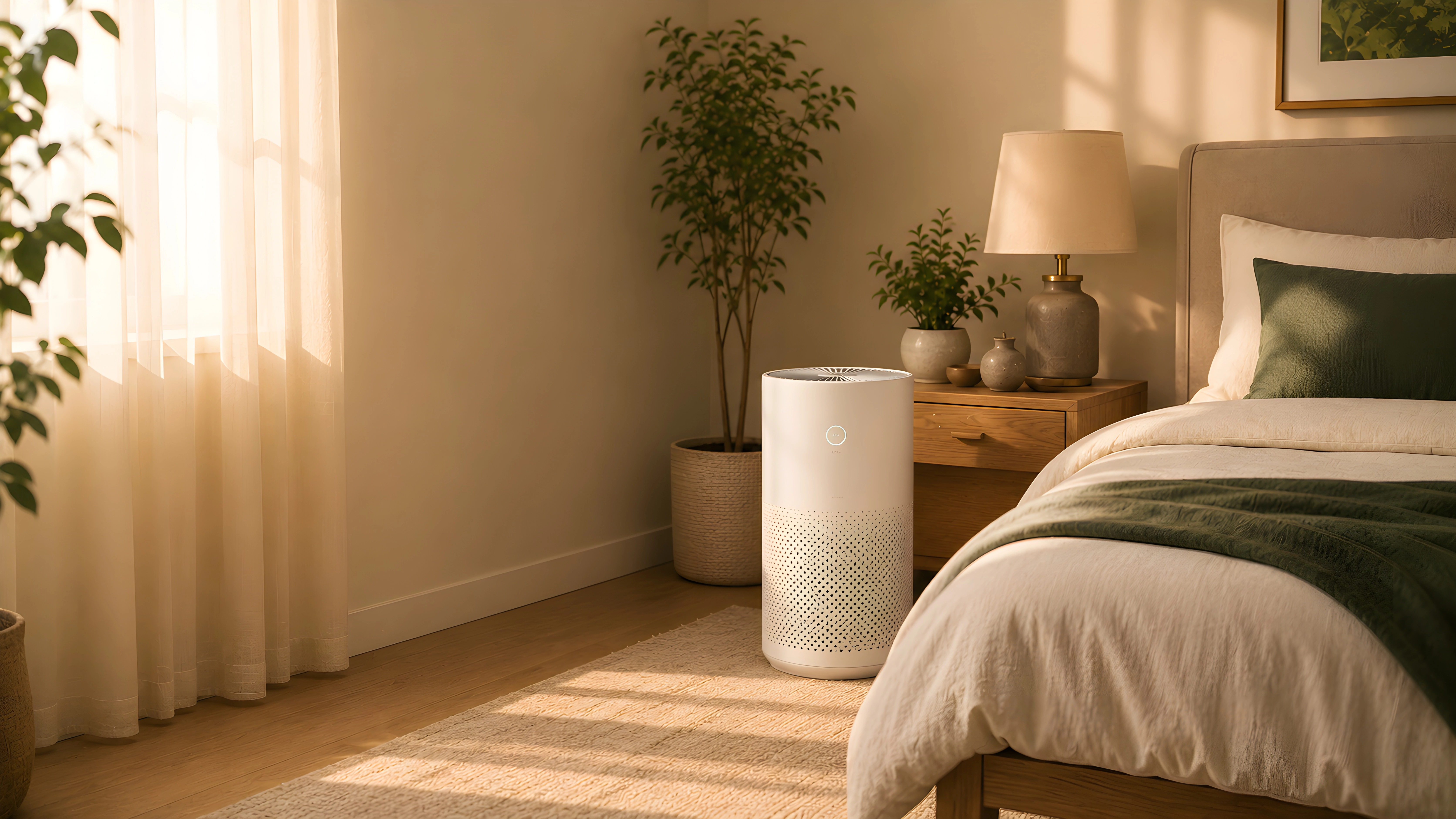
Place the purifier where air can circulate freely. Avoid blocking intake or outlet vents. Do not hide it behind furniture or curtains and expect the same performance.
Ozone Concerns
Avoid ozone-generating air cleaners in bedrooms. Ozone can irritate airways and is not a feature RestWise Guide recommends for sleep spaces.
Practical Pros and Limitations
An air purifier may reduce airborne particles in a specific room when sized, placed, and maintained properly. It cannot remove every trigger, fix moisture problems, replace cleaning, or address outdoor pollution entering through leaks.
Buying Mistakes to Avoid
Do not buy without checking filter cost. Do not choose a purifier too small for the room. Do not run it with clogged filters. Avoid ozone claims. Do not expect medical outcomes from a consumer purifier.
Selection Checklist
- Suitable CADR
- HEPA or clearly specified filter
- Quiet sleep mode
- Dim or off display
- Replacement filter availability
- Reasonable energy use
- Good placement options
- No ozone generation
Conclusion
The best bedroom air purifier is quiet enough to use nightly, strong enough for the room, and simple enough to maintain. Treat it as one part of bedroom air quality, not a cure-all.
RestWise Guide may earn a commission from qualifying purchases made through links on this site, at no additional cost to you.
FAQ
Can an air purifier cure allergies or asthma?
No. Air purifiers may reduce some airborne particles, but they do not cure allergies, asthma, or disease.
What is CADR?
CADR is a clean air delivery rate that helps compare how quickly a purifier can filter air for certain particles.
Should I avoid ozone-generating devices?
Yes. RestWise Guide recommends avoiding ozone-generating air cleaners for bedroom use.